Search
Find coasters, parks, other rides, manufacturers, and knowledge guides.
45 results for “launch”
Coasters
- Copperhead Strike
Copperhead Strike
Carowinds · 52 mph · 131 ft
52 mph131 ft - Full Throttle
Full Throttle
Six Flags Magic Mountain · 70 mph · 160 ft
70 mph160 ft - Maxx Force
Maxx Force
Six Flags Great America · 78 mph · 105 ft
78 mph105 ft - Powder Keg
Powder Keg
Silver Dollar City · 64 mph · 110 ft
64 mph110 ft 
Siren's Curse
Cedar Point · 50 mph · 120 ft
50 mph120 ft- Storm Runner
Storm Runner
Hersheypark · 72 mph · 150 ft
72 mph150 ft - Tempesto
Tempesto
Busch Gardens Williamsburg · 63 mph · 154 ft
63 mph154 ft - Tigris
Tigris
Busch Gardens Tampa Bay · 62 mph · 150 ft
62 mph150 ft - Time Traveler
Time Traveler
Silver Dollar City · 50 mph · 100 ft
50 mph100 ft 
Top Thrill 2
Cedar Point · 120 mph · 420 ft
120 mph420 ft- West Coast Racers
West Coast Racers
Six Flags Magic Mountain · 62 mph · 122 ft
62 mph122 ft - Wicked
Wicked
Lagoon · 55 mph · 110 ft
55 mph110 ft 
Wicked
Lagoon · 55 mph · 110 ft
55 mph110 ft- Backlot Stunt Coaster
Backlot Stunt Coaster
Kings Dominion · 40 mph · 50 ft
40 mph50 ft 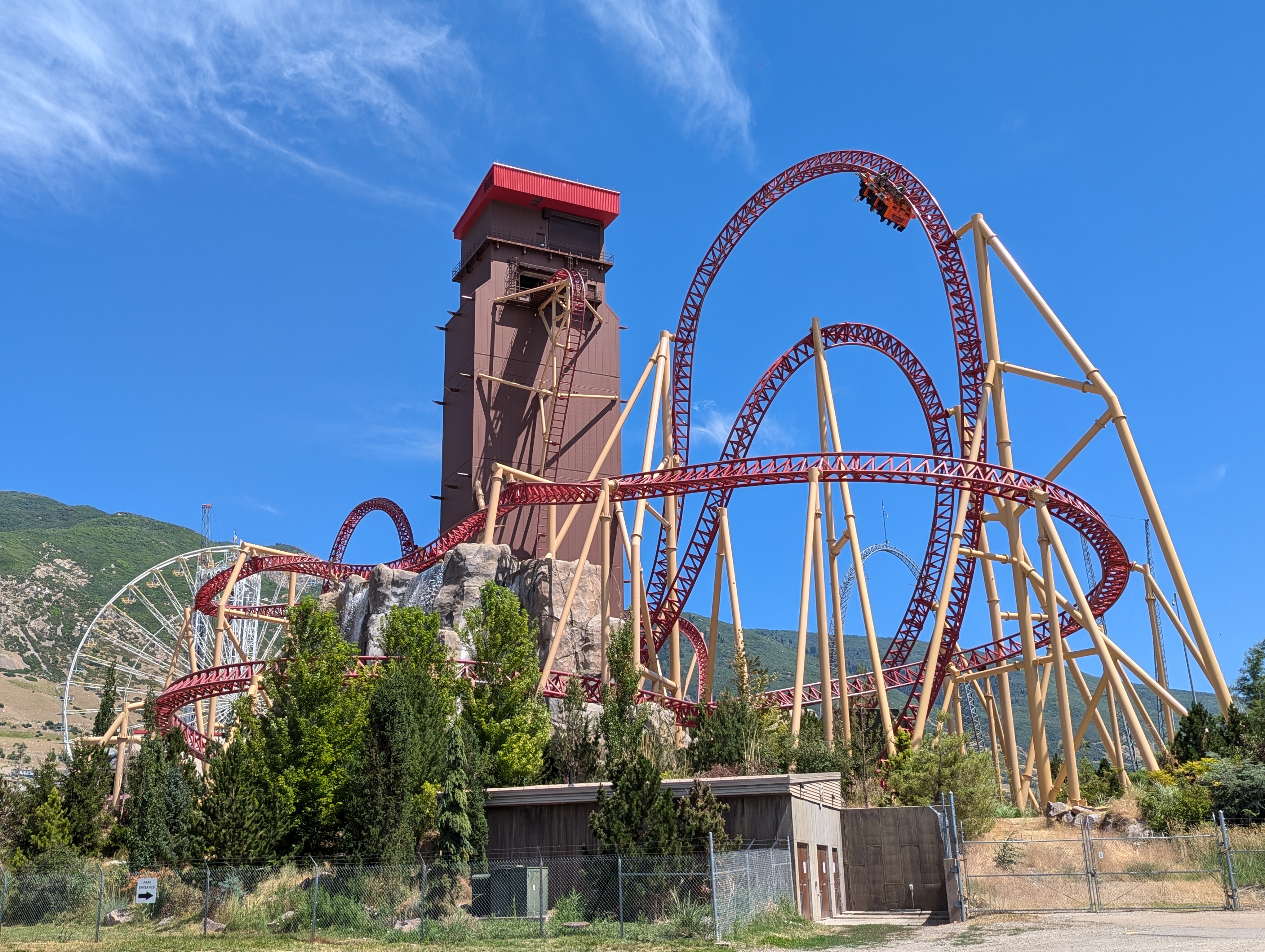
Cannibal
Lagoon · 70 mph · 208 ft
70 mph208 ft- Fire in the Hole
Fire in the Hole
Silver Dollar City · 40 mph · 50 ft
40 mph50 ft - FireChaser Express
FireChaser Express
Dollywood · 34 mph · 63 ft
34 mph63 ft - Flight of Fear
Flight of Fear
Kings Dominion · 60 mph · 115 ft
60 mph115 ft - Flight of Fear
Flight of Fear
Kings Island · 54 mph · 54 ft
54 mph54 ft - Lightning Rod
Lightning Rod
Dollywood · 73 mph · 165 ft
73 mph165 ft
Other rides
Guides
- How launches work
How launches work
LIM, LSM, hydraulic — different ways to shove a train from rest to serious speed.
elements - Launch physics overview
Launch physics overview
Motors and hydraulics add speed fast — different systems trade acceleration shape, noise, and reliability.
physics - Launched coasters
Launched coasters
Motors or hydraulics replace or supplement the lift hill for rapid acceleration.
coaster types - Flat rides vs roller coasters
Flat rides vs roller coasters
Not everything with a lift hill is a “coaster.” Flat rides spin, swing, and launch without a continuous circuit.
coaster types - Flywheel launches
Flywheel launches
Store energy in a spinning mass, then dump it into the train in one burst — classic hydraulic acceleration feel.
physics - Hydraulic and pneumatic launches
Hydraulic and pneumatic launches
Catch cars, cables, and pressure vessels — mechanical launches with a signature kick.
physics - Intamin — launches and record chasing
Intamin — launches and record chasing
German builder behind many hydraulic launches, gigas, and intense accelerator layouts.
culture - Linear induction motors (LIM)
Linear induction motors (LIM)
Alternating magnetic fields shove the train without touching it — the workhorse of many modern launches.
physics - Linear synchronous motors (LSM)
Linear synchronous motors (LSM)
Timed magnetic pulses pull the train along — precise and common on multi-launch coasters.
physics - Potential and kinetic energy
Potential and kinetic energy
Lift hills store energy; drops and launches convert it into speed — friction steals some along the way.
physics - Premier Rides — launches and multi-pass insanity
Premier Rides — launches and multi-pass insanity
Sky Rocket II clones and custom launched layouts with repeated elements.
culture - Speed vs height — which matters more?
Speed vs height — which matters more?
Tall lifts do not guarantee top speed; launches can be fast without being huge.
specs - Friction, drag, and why speed drops
Friction, drag, and why speed drops
Air and wheels steal energy — designers account for it on every hill after the first drop.
physics - G-forces on coasters (basics)
G-forces on coasters (basics)
Positive, negative, and lateral — three directions of force that define ride feel.
specs - Gravity on roller coasters
Gravity on roller coasters
The train is always falling — track shape decides which direction that pull becomes force on your body.
physics - How to read coaster stats
How to read coaster stats
Height, speed, length, and inversions each tell a different story. Combine them instead of ranking on one number.
specs - Inversions and common elements
Inversions and common elements
Loops, corkscrews, and immelmans are building blocks. Knowing the names helps you predict the ride feel.
elements - Tire drives and friction lifts
Tire drives and friction lifts
Rubber wheels that push the train — common in stations and some boost hills.
physics - Train mass and momentum
Train mass and momentum
Heavier trains carry more momentum — loads and empty seats can change feel slightly.
physics - Why manufacturer names appear on specs
Why manufacturer names appear on specs
B&M, Intamin, Vekoma, and others have recognizable design fingerprints regular riders learn to spot.
culture